Planning a village’s future shouldn’t rest on guesswork.
GPDP Sahayak is an AI planning platform for Gram Panchayat Development Planning. It helps a Gram Sevak, Sarpanch and members prepare a complete, evidence-based and fundable plan, so that no village need or eligible fund is missed.
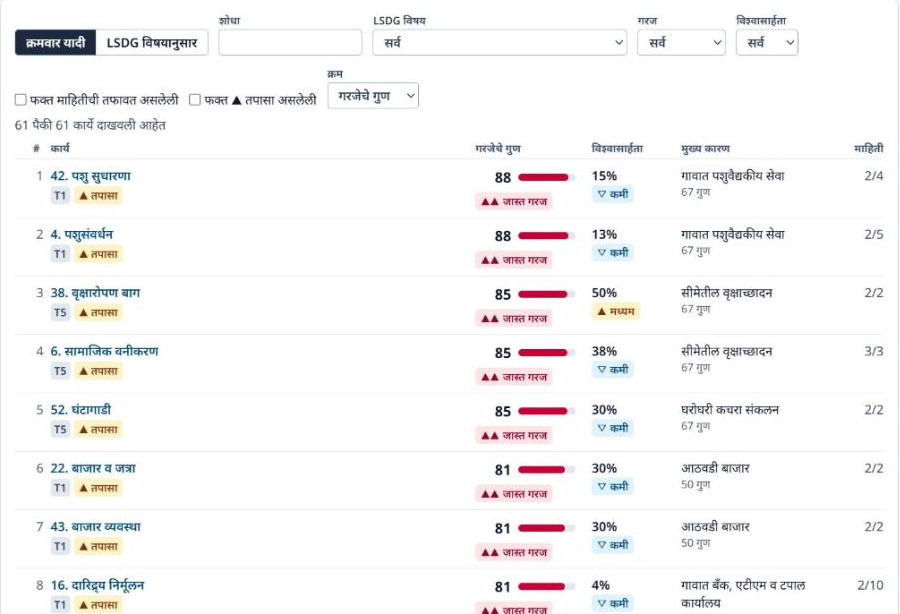
70+ functions to plan. Rarely a trained professional to plan them.
Every Gram Panchayat must prepare a development plan that spans 70+ functions, from agriculture and irrigation to digital public services. It is not only about roads, nali and street lights: in this new era, a village should aspire to much more. Yet the Gram Sevak, Sarpanch and members who prepare it are rarely trained development professionals.
-
The plan is due before the Gram Sabha.
70+ functions to cover, from cattle care to digital literacy. One person, alongside every other duty.
-
The data is somewhere.
Census 2011, Mission Antyodaya 2019-20, PAI scores, registers, portals and GRs in English. Much of it outdated, some of it missing.
-
Rules, resources and programmes keep changing.
Fund rules are revised, budgets shift, and programmes are launched or replaced. In 2026 the 16th Finance Commission arrived and VB-G RAM G replaced MGNREGA.
-
So the plan follows the loudest demand.
A road, a light, a drain. Soil, water, nutrition and livelihoods stay unplanned, year after year.
- Agriculture
- Irrigation
- Soil & land
- Livestock
- Fisheries
- Forestry
- Drinking water
- Sanitation & waste
- Health
- Nutrition
- Women & children
- Education
- Skills & jobs
- Livelihoods & SHGs
- Housing
- Energy
- Climate resilience
- Biodiversity
- Disaster preparedness
- Elderly care
- Markets
- Village safety
- Digital public services
- Data literacy
- …and more
The result: plans that are incomplete, built on intuition, a few visible demands and biases, and weakly evidenced. Eligible funds go unclaimed, and the value the village could create for its people goes unplanned.
A weak plan leaves eligible funds unclaimed and health, livelihoods, women, children and climate needs outside public spending, year after year.
A complete, evidence-backed view of all 70+ functions.
GPDP Sahayak is an AI planning platform for Gram Panchayat Development Planning, that gives every Gram Panchayat what it has rarely had: a complete, evidence-backed view across 70+ functions, from agriculture and irrigation to digital public services & data literacy. It combines the best available public data with local inputs on socioeconomic conditions and demographics, shows the source and date of every number, and builds a plan that can strengthen the case for more funding and creates value for current and future of the village.
The whole planning chain in one tool.
- 01An automatic village profile built from public data
- 02Guided inputs for what public data lacks
- 03Needs ranked across 70+ functions
- 04Matching of every fund source and its rules
- 05Budget-constrained prioritisation with plain-language reasons
- 06Gram Sabha approval with bilingual exports
Safe AI for non-technical users.
GPDP Sahayak makes AI safe and useful for people with no technical training, in a setting where a wrong number can misdirect public money.
- 01AI only proposes
- 02Answers are checked
- 03Rules live in data, not code
- 04Works when things fail
Today’s tools record a plan or find gaps. None plans end to end.
- Village data
- Need score
- Costed work
- Fund rule
- Optimiser
- Gram Sabha vote
Better plans, with less effort, for the people they serve.
Better plans with less effort
Gram Panchayats can prepare more complete, evidence-backed development plans in less effort.
Informed decisions
The Gram Sevak, Sarpanch and members can review 70+ functions against village conditions instead of relying on intuition or a few visible demands.
Fewer missed funds
By matching each activity to the fund sources it may qualify for, the app should reduce the chance of eligible funds going unclaimed and strengthen the village’s case when seeking them.
More community trust
Transparent priorities, with reasons shown to the Gram Sabha, should improve trust and participation.
Comparable plans at scale
Climate and SDG tagging and a standard roll-up format let districts and the state compare and combine many plans.
Lasting value
The aim is lasting value for the people each Gram Panchayat serves, today and in the years ahead.
A new state needs data, not code.
Rules, schemes and templates are data an admin edits. A standard roll-up lets block, district and State combine plans.
- 1 GPPurad (Nerad), Wani: the prototype already runs on its data
- 10 GPsWani taluka, planned pilot · 21,900+ people
- YavatmalDistrict proposal at 12 months
- MaharashtraBlock, district and State combine plans in one roll-up
- ~38,000 GPsMaharashtra Zone · 8 cr+ villagers
- 2.5 lakh+ GPsIndia · 83 cr+ villagers
From tested prototype to field-proven in 12 months.
- Idea
- Proof of concept
- Working prototype ✔ today
- Field pilot (planned)
- Ready to deploy
Team
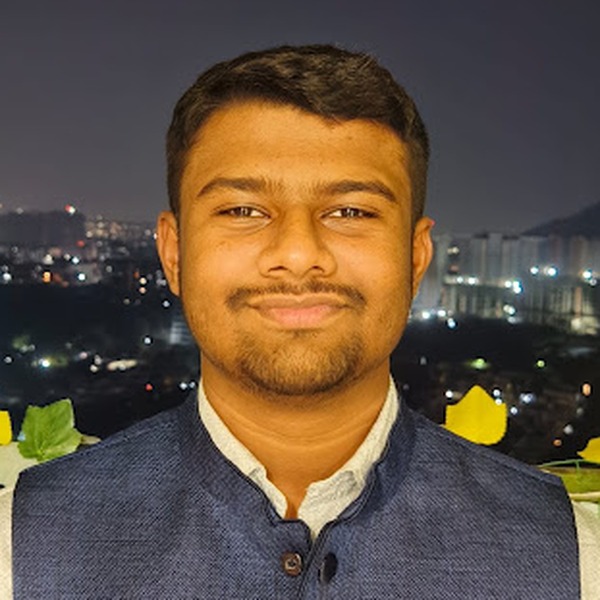
Shivaji Subhash Lode
Student; designed and built GPDP Sahayak end to end: product, software, AI, data, GIS and the optimiser.
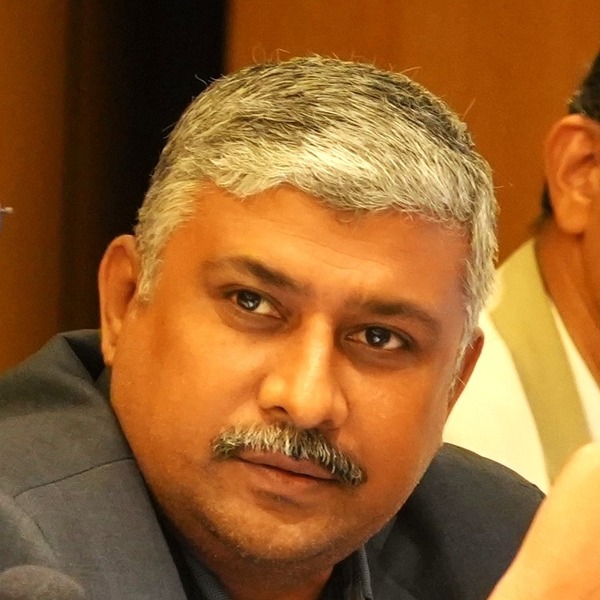
Subhash M Lode
CEO, Bharat Valley Venture Capital; Development Professional.